Explain the spend
Understand which workloads, teams and environments drive costs. Make spending changes easier to investigate and explain.
FinOps consultancy · AWS & Azure
I help teams connect cloud costs to the people, workloads and business decisions behind them—then turn that visibility into practical improvements.
Certified FinOps Professional
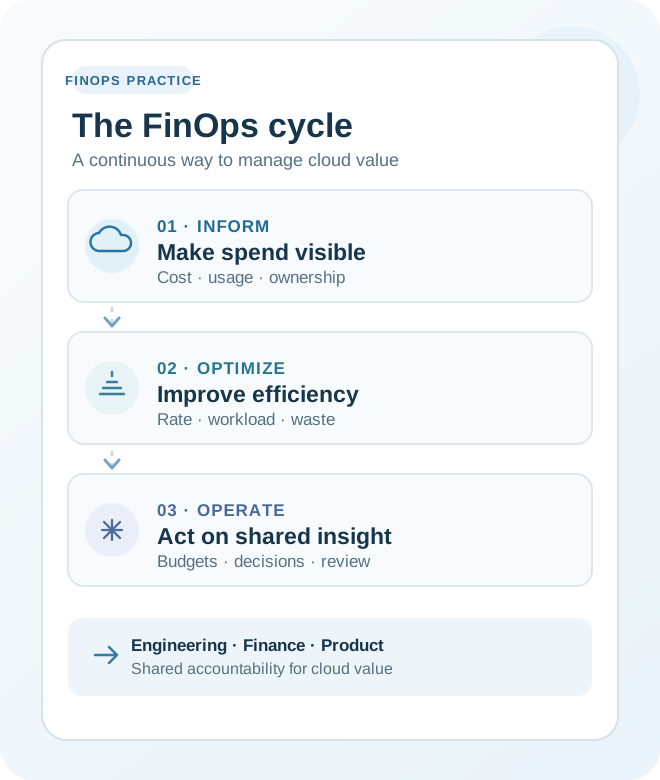
What is FinOps? FinOps brings engineering, finance and business teams together to understand technology costs and make informed decisions about value. In cloud environments, that means shared visibility, clear ownership and an ongoing practice of improvement.
Explore the FinOps Foundation framework ↗01 / Why it matters
New workloads, changing demand and forgotten resources can all change the bill. When ownership and reporting are unclear, it becomes difficult to explain that change—or decide what to do about it. FinOps gives teams a shared basis for those conversations.
Understand which workloads, teams and environments drive costs. Make spending changes easier to investigate and explain.
Give application owners and finance a common view of budgets, forecasts and the cost implications of growth or change.
Prioritise waste and inefficiency while considering performance, resilience and the value each workload supports.
02 / How I can help
We can start with the areas creating the most friction in your AWS or Azure environment. Each workstream has a practical output that your team can use and maintain.
I help define owners, cost centres, projects and environments, review missing allocation data and establish tagging expectations at onboarding.
Useful output: an allocation approach, tagging rules and a prioritised list of gaps.
I help shape reports that connect cloud spend to workloads and owners, so teams can see their share of costs and understand changes. Showback makes costs visible without needing an internal billing process.
Useful output: a reporting structure, dashboard requirements and agreed review questions.
I help establish budgets, account for planned workload changes, review forecast variance and define who responds to thresholds or unexpected spending.
Useful output: a planning baseline, alert ownership and a recurring forecast review.
I work with application owners and engineers to review idle resources, sizing, storage and backup schedules. Recommendations consider business criticality and operational requirements.
Useful output: an optimisation backlog with owners, dependencies and validation steps.
I help review usage patterns, existing commitments and their coverage and utilisation. We assess suitability and trade-offs before deciding whether further commitments make sense.
Useful output: a commitment review and decision criteria tied to expected demand.
I help define responsibilities, review routines and the way cost decisions enter onboarding and change processes. Engineering, finance and application owners need a shared way to act.
Useful output: a working rhythm, ownership map and measures to track progress.
03 / Why work with me
I’m a certified FinOps Professional, combining formal FinOps knowledge with practical cloud governance and operations experience.
At Convatec, I defined and implemented cloud governance and FinOps practices across AWS and Azure. My work connected cost visibility, platform operations and decisions made with application owners.
My earlier experience in application development and Agile delivery helps me ask how a workload is used, what it needs and who can act on a recommendation. I bring that perspective to cost reviews and to the way improvements are delivered.
I can support a focused assessment, a defined improvement workstream or an ongoing consulting assignment. We agree responsibilities and expected outputs before starting.
Explore my wider experience →Examples from my employment at Convatec, January 2021–May 2026.
04 / How we work
The FinOps cycle of Inform, Optimize and Operate provides a useful structure. We revisit these activities as your workloads and priorities change.
Discuss your priorities, review available cost data and ownership, and identify reporting or process gaps. Agree the scope and establish a baseline.
Assess opportunities with your team, weigh trade-offs and prioritise a realistic backlog. Document recommendations, responsibilities and next steps.
Establish review routines, measures and a handover so your teams can follow through, monitor progress and refine the approach.
A focused first engagement: a FinOps assessment with written findings, prioritised recommendations and an agreed roadmap. Scope, required inputs, deliverables and commercial terms are agreed before work starts. I lead the engagement personally; any additional specialists are agreed with you.
About the FinOps phases ↗05 / Common questions
You can start with a focused problem: unclear cost ownership, limited reporting or a growing bill. I help identify the people who need to be involved and agree a manageable first scope.
Cost and usage reports, the account or subscription structure, tagging practices, current budgets and details of planned workload changes are useful starting points. We agree the necessary access and inputs during scoping.
We agree measures against your starting position, such as allocation completeness, forecast variance, resolved optimisation actions or commitment utilisation. Financial outcomes depend on your environment and the changes your team implements.
Let’s discuss your priorities
Tell me what is happening in your AWS or Azure environment, what you want to improve and who is involved. We can discuss a focused review or a wider FinOps assignment.
Discuss FinOps on LinkedIn